
When tasked with creating the website for Voicify EU, a network championing the voices of young people with lived migration experiences, I knew the technical foundation had to be as thoughtful and inclusive as the organization’s mission. The result is a WordPress site that prioritizes structured content management, consistent design systems, and exceptional user experience—both for website visitors and content administrators.
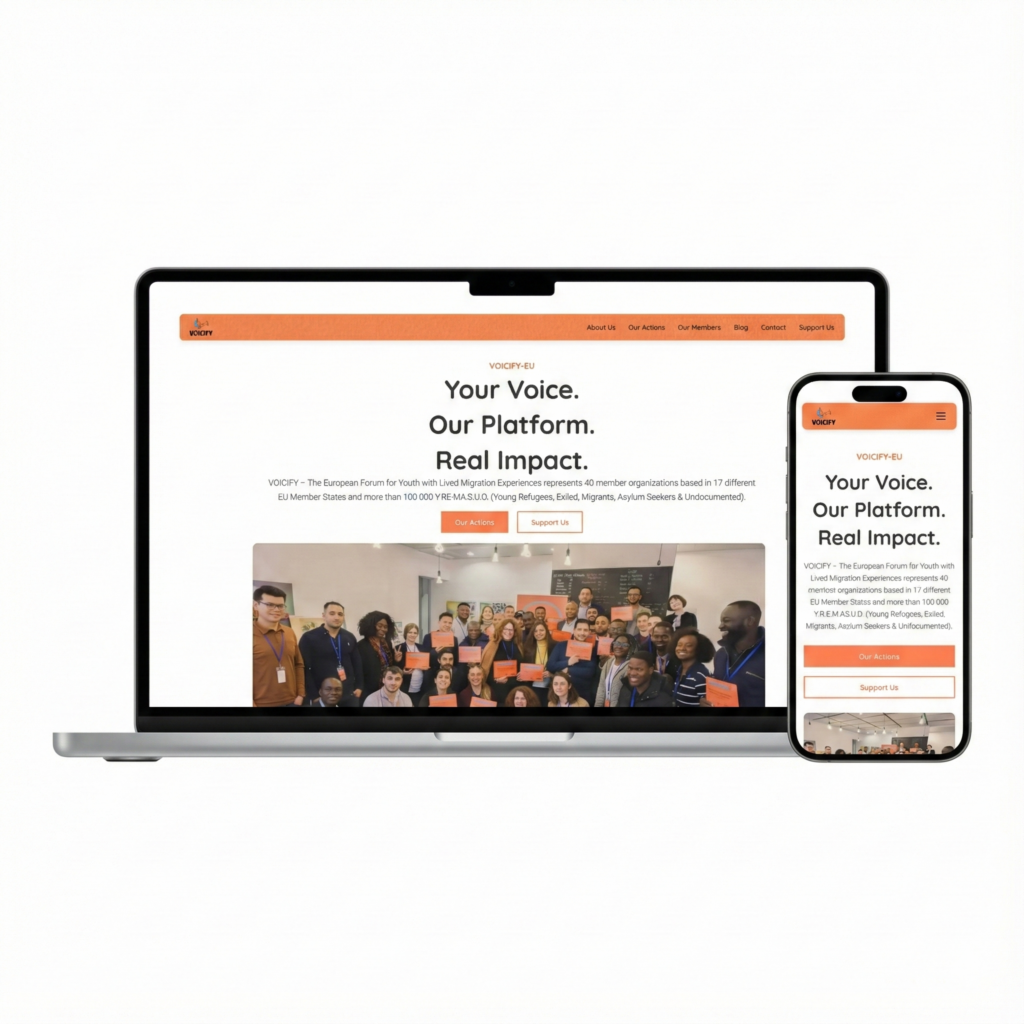
Custom Post Types: The Backbone of Organized Content
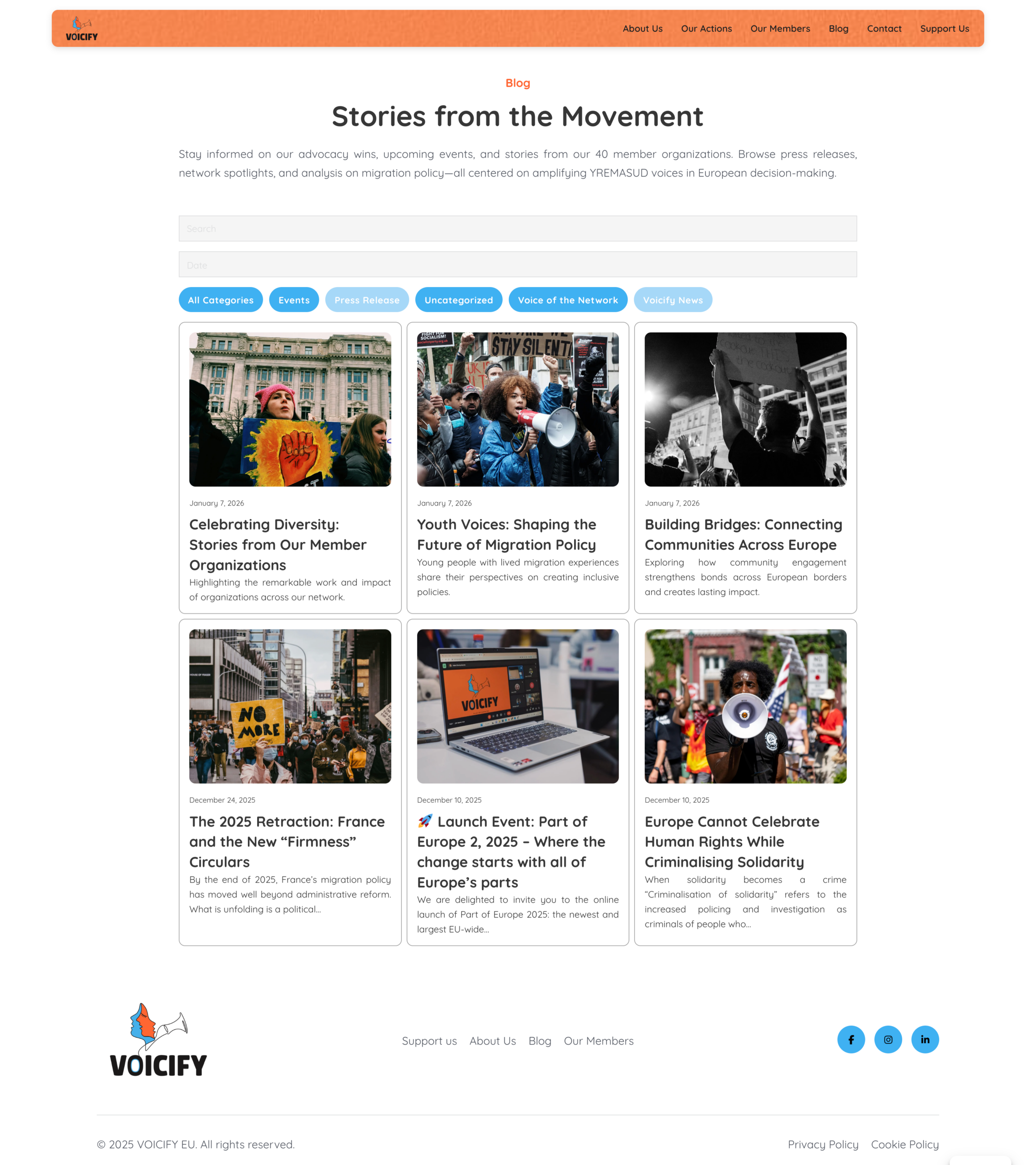
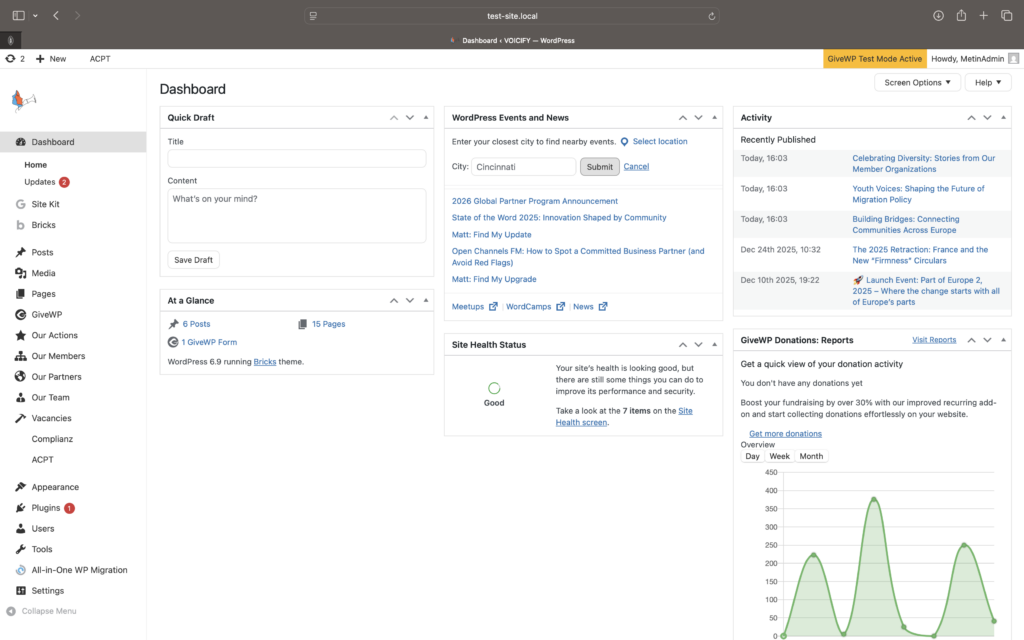
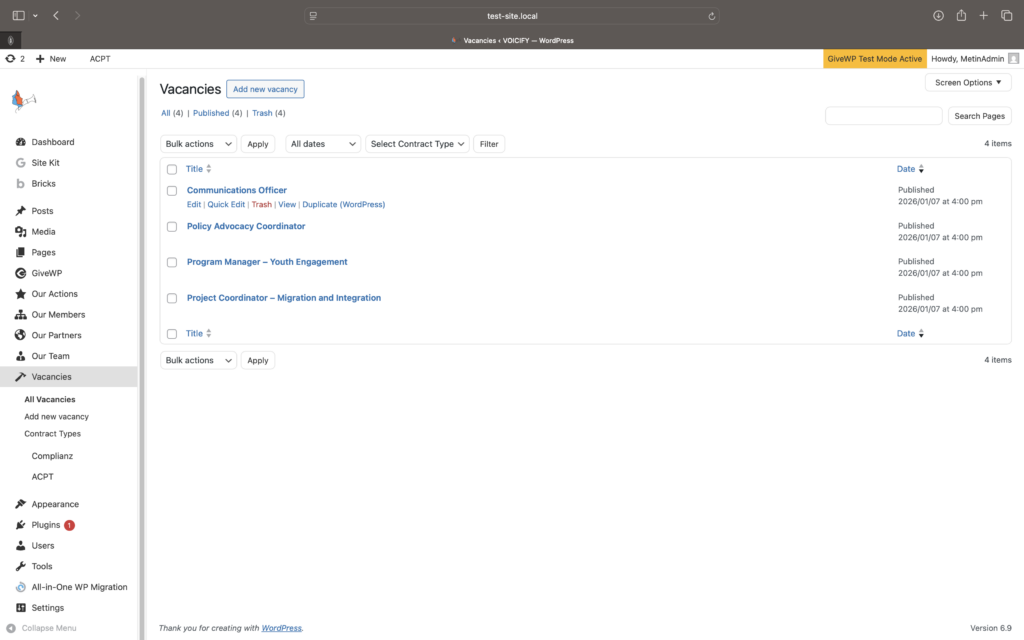
The heart of this website’s architecture lies in its strategic use of WordPress Custom Post Types (CPTs). Rather than cramming everything into standard posts and pages, I created five distinct content types—each serving a specific purpose and ensuring content remains organized and scalable.
Our Team and Our Members were designed to showcase the people and organizations within the Voicify EU network. Each entry maintains consistent fields and structure, making it simple to add new profiles without worrying about formatting inconsistencies. Our Partners follows a similar pattern, creating a dedicated space for highlighting collaborative relationships.
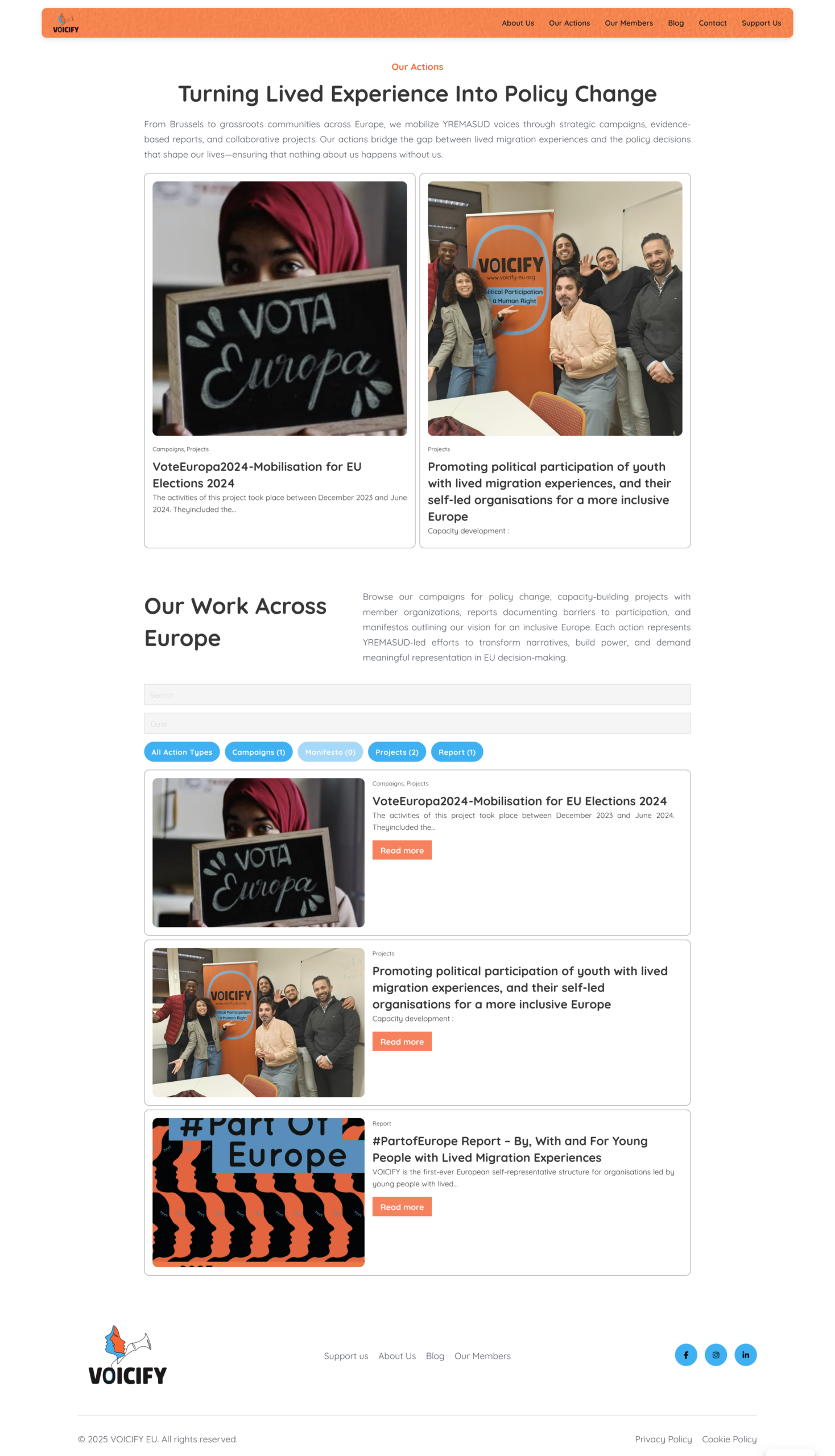
Our Actions was particularly important—it allows the organization to document campaigns, initiatives, and advocacy work in a standardized format. This isn’t just about aesthetics; it’s about making sure every action has the same structural integrity, from overview to impact metrics.
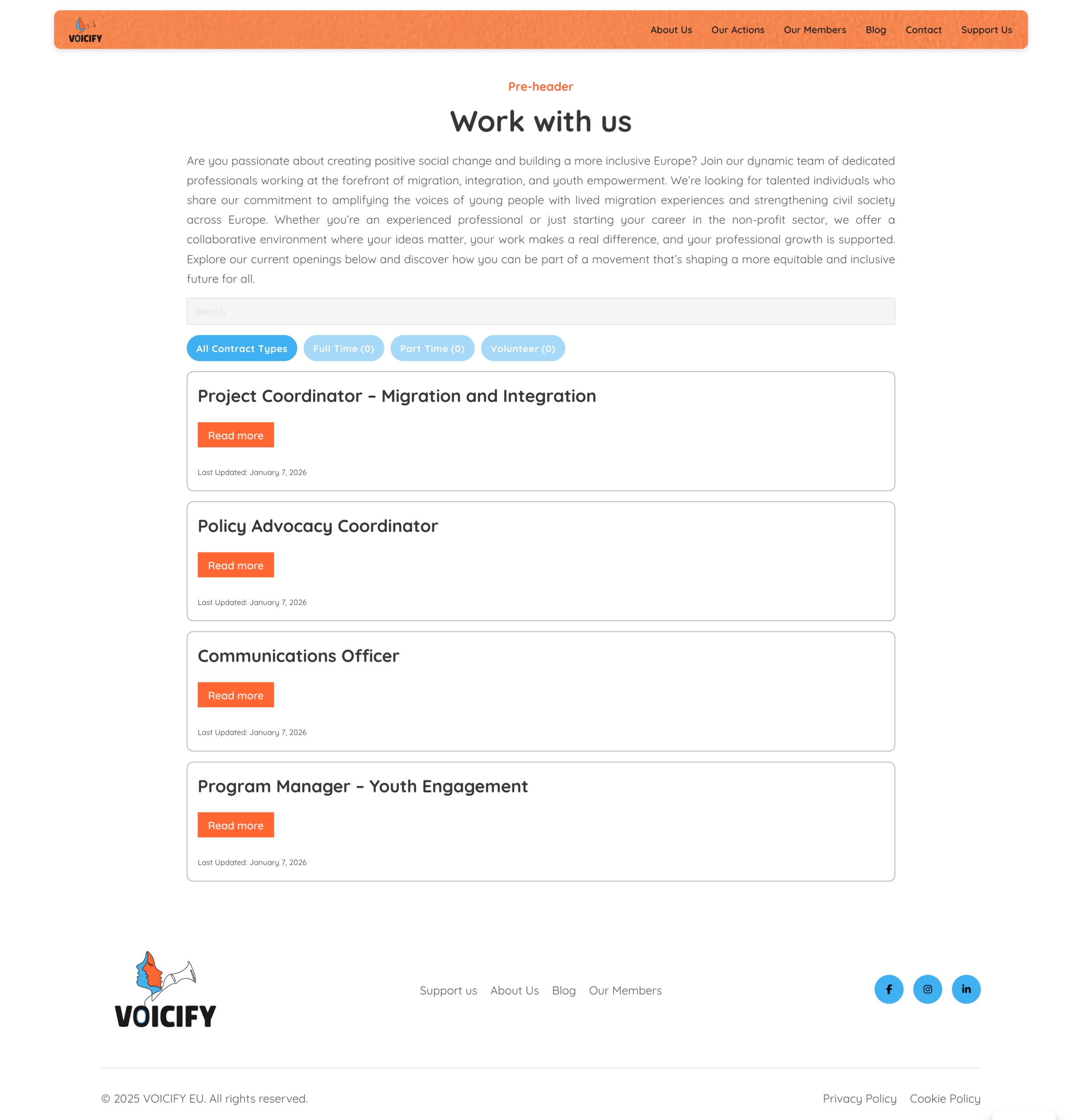
Finally, Vacancies provides a professional recruitment platform. Each job posting follows the same template: position overview, responsibilities, requirements, benefits, and application instructions. When you’re building trust with potential candidates, consistency matters.
Design Consistency Through Bricks Builder
For the front-end, I chose Bricks Builder v2.0 as the visual page builder, but not in the way most people use page builders. Instead of designing each page from scratch, I established a global CSS class system that ensures every element—buttons, headers, cards, containers—follows the same visual language.
This approach serves two critical purposes. First, it guarantees design consistency. When a user navigates from the homepage to a blog post to a team member profile, everything feels cohesive. Second, it dramatically speeds up content creation. Need to add a new page? Just apply the predefined classes and you’re already 80% of the way there.
The classes are intentionally locked down. The documentation explicitly warns administrators not to modify these global styles without consulting the development team. This might seem restrictive, but it’s actually liberating—content editors can focus on what they’re saying rather than worrying about how it looks.
Dual Perspective UX Design
Most websites obsess over the visitor experience while treating the admin dashboard as an afterthought. I took a different approach: both audiences deserve thoughtful design.
For Website Visitors
The front-end follows intuitive navigation patterns with a clear sitemap hierarchy. Public-facing pages (Home, About Us, Blog) are easily accessible. Donation-related pages (Support Us, Donation Confirmation) guide users through contribution flows. Legal pages (Privacy Policy, Cookie Policy) are present but non-intrusive.
Each custom post type has its own archive and single-post template, optimized for how visitors consume that specific content type. Team member profiles emphasize photography and bios. Action pages highlight campaign details and outcomes. The experience is tailored, not generic.
For Content Administrators
The WordPress admin dashboard received equal attention. I developed a custom dashboard plugin that transforms the default WordPress backend into something actually pleasant to use. Instead of the overwhelming default view, administrators see relevant shortcuts, recent posts from each custom post type, and quick-add buttons.
The admin experience extends to post editing. Custom fields are organized logically. Featured images are required (and the system makes this obvious). The Bricks editor integration is seamless—admins can see exactly how their content will appear without guessing.
Technical Foundations
Behind the scenes, the technical architecture ensures everything runs smoothly:
- Database-driven content: All custom post types are properly registered and stored in WordPress’s database with appropriate taxonomies and metadata.
- ACPT Plugin Integration: The Advanced Custom Post Type (ACPT) plugin manages CPT creation, making it easy to modify structures without touching code.
- Media Library Organization: Every piece of content has featured images assigned from a well-organized media library, ensuring visual consistency across the site.
- Form Integration: Contact forms connect to Google Sheets via webhooks, with email notifications sent to both it@voicify-eu.org and hi@voicify-eu.org. This dual-notification system ensures no inquiry falls through the cracks.
The Documentation Layer
Recognizing that this website would need to be maintained by non-developers, I created comprehensive architecture documentation in both Markdown and Word-compatible HTML formats. The documentation covers:
- Complete plugin inventory with purposes and configurations
- Custom post type structures and use cases
- Bricks Builder CSS class system guidelines
- Content management best practices
- Hosting and support information
The documentation isn’t just technical reference—it’s a training manual, ensuring anyone who takes over this site understands why it was built this way.
Lessons Learned
This project reinforced a key principle: structure enables creativity. By establishing clear content types, design systems, and admin workflows, we didn’t constrain the organization—we empowered them. Content editors can now focus on telling Voicify EU’s story rather than wrestling with WordPress.
The dual-perspective approach—caring equally about visitor and administrator experiences—transformed what could have been “just another WordPress site” into a genuinely pleasant platform to use and maintain. When your CMS respects the people using it, better content follows naturally.
For organizations like Voicify EU, whose work centers on amplifying voices and building inclusive communities, their website should embody those same values. Through thoughtful architecture, consistent design systems, and respect for all users, that’s exactly what we built.
The Voicify EU website is hosted by Dynamobees on Hetzner infrastructure, built with WordPress, Bricks Builder v2.0, and powered by purpose-driven architecture. Click this link to view the website: voicify-eu.com